
Globally, significant resources and time are invested in researching new therapies that often fail clinically and benefit no patients. Envision a world where predicting a drug’s effects on biological models that can’t yet be tested in labs, while accurately reflecting patient biology, is possible.
Turbine is a biotech company that has developed an AI-powered “virtual lab” — the first cell simulation platform focused on a biology-first approach.
The Simulated Cell platform by Turbine generates virtual cells to mimic molecular-level behavior based on actual patient biology. It enables in silico experiments to hasten drug discovery and development across oncology and other fields.
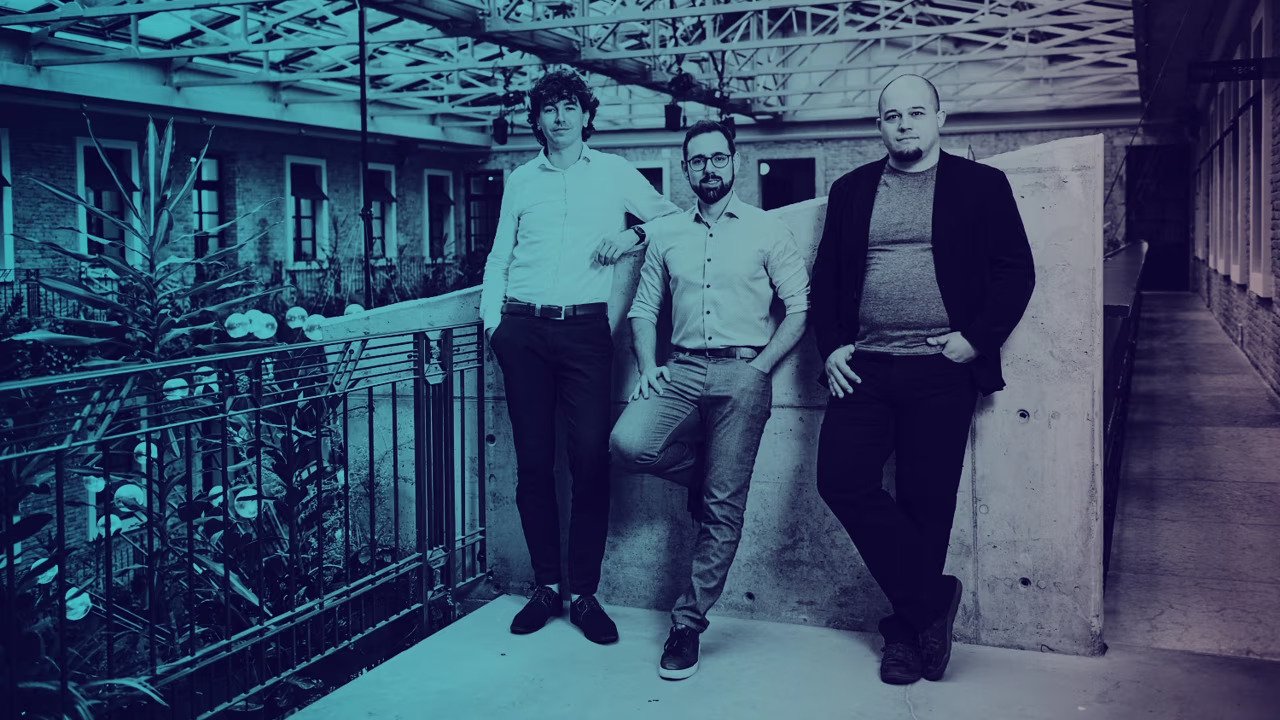
I spoke with Szabi Nagy, Turbine’s co-founder and CEO, about the company’s beginnings, product offerings, and expansion to a team of over 60 specialists in data science, computational biology, and molecular biology from Budapest’s tech talent pool.
Predicting Drug Performance Before Clinical Trials
The Simulated Cell platform models the protein signaling logic that determines cell fate, enabling large-scale in silico experiments impossible in the physical realm. Turbine.ai develops a digital twin of cellular systems, a biologically representative virtual model that replicates real cells, allowing for simulation and prediction within a controlled environment.
This approach allows billions of simulated experiments to be conducted in the time a single wet lab test would take, empowering biopharma by identifying disease-driving mechanisms.
Once exclusive to big pharma, Turbine launched a virtual lab in April that allows scientists to use this advanced cellular simulation technology to address challenging R&D issues, such as predicting a drug’s performance in humans before investing in costly clinical trials. Smaller biotech teams are now using this tool to conduct experiments more efficiently.
Origins in Network Science to Machine Learning
Turbine initially started as a network science company, not an AI company. The goal was to depict a cell as a network with nodes (proteins) and edges (interactions).
Nagy stated, “There’s rich mathematical theory on network behavior. We wondered if biology could be represented as a dynamic network and simulated under changing conditions.”
This approach offers interpretability, allowing scientists to predict downstream effects when inhibiting a protein — whether the cell survives, dies, or changes behavior.
However, Nagy explained that while scientists appreciated the intuitive understanding and hypothesis generation this approach provided, scalability was limited.
“Experts manually built these networks based on literature, which introduced human bias and limited predictive capability.”
This led the company to adopt machine learning, which enhanced predictability and flexibility, expanding the ability to model more drugs and diseases. But it introduced a “black box” element that concerned biologists, who mistrusted predictions they couldn’t understand.
Simulating Biology vs. Training an LLM
Simulating biology is challenging. Turbine’s team spent initial years scaling the technology.
Nagy noted, “Biology is immensely complex and microscopic, limiting our data generation capacity.”
Challenges included representing biology at a universal learning level and creating a model capable of mimicking various cell types and tissues.
With deep learning, the challenge was finding the right abstraction to train models effectively without excessive data generation efforts.
Unlike training LLMs on words and grammar, with cells, “You get only partial snapshots and have minimal data to learn a complex system from.” Numerous potential experiments posed another challenge.
Turbine began with a foundational machine learning model to learn biological basics — how proteins interact and how external factors alter protein functions.
The model uses data from biological systems, including lab experiments, animal studies, and human samples, particularly genomic and protein data, primarily transcriptomics for better training.
These snapshots guide the model’s training: analyzing cell states pre-and post-intervention to infer interactions across millions of experiments.
Challenges Facing Biotech Startups
Though drug discovery is a promising AI application, translating lab science into commercial products that healthcare systems adopt is complex.
With Turbine’s industry experience, I asked Nagy about common struggles biotech startups face in achieving commercial success. Nagy identified four key factors:
Business Model.