
UPI vs PPI: Understanding the Key Differences
Key Takeaways
UPI: Designed for instant, secure, bank-to-bank transactions using a single app.
PPI: Convenient, prepaid tools for payments, ideal for those without bank accounts.
Security: Both systems are robust, with UPI relying on secure digital authentication and PPIs governed by RBI regulation.
This concise overview should help you understand when to use UPI or PPI, and their respective advantages in India’s digital payments landscape.
What is UPI?
UPI is a real-time payments system developed by the National Payments Corporation of India (NPCI). It enables users to send and receive money instantly using a smartphone app, with transactions possible at any time — day or night, weekends and holidays included. UPI links multiple bank accounts via a single UPI ID, and provides features like peer-to-peer transfers, QR code payments, and bill settlements. Security measures include PIN protection and two-factor authentication.
Key Benefits of UPI
Easy and Convenient: Send money or make payments instantly.
Safe & Secure: Transactions protected by PIN, biometric, and regulatory guidelines.
Widely Accepted: Used by merchants nationwide; accessible for most transactions.
What is PPI?
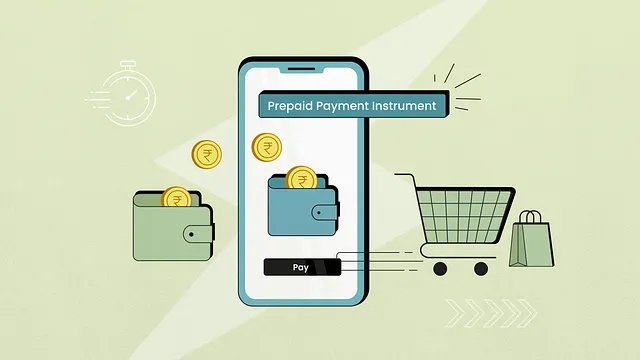
PPI is a prepaid payment instrument, allowing users to load funds onto a card or digital wallet for future payments. Unlike UPI, PPI does not require a bank account — making it useful for those outside formal banking. Examples of PPIs include gift cards, mobile wallets, prepaid debit cards, and vouchers. These instruments are regulated by the Reserve Bank of India, ensuring security and consumer protection.
Types of PPIs in India
Closed-System PPIs: Only usable at issuing merchant (e.g., store gift cards).
Semi-Closed PPIs: Usable at contracted merchants; cannot withdraw cash (e.g., mobile wallets).
Open-System PPIs: Issued by banks; usable for payments and cash withdrawal (e.g., debit/credit cards).
Key Features & Benefits
Flexible & Accessible: Can be used by people without bank accounts.
Convenient: Useful for online shopping, bill payment, and transfers.
Regulated Security: RBI oversight for safety and reliability.
How Are UPI and PPI Related?
While UPI and PPIs serve distinct purposes, they can work together. PPIs (like digital wallets) can be linked to UPI, allowing users to make payments via UPI apps without directly accessing their bank account. This integration streamlines secure, fast digital transactions.
UPI vs PPI: Understanding the Key Differences:
UPI (Unified Payments Interface)
Definition: Real-time bank-to-bank payment system.
Initiation: Directly linked to a bank account.
Usage: Instant money transfers, bill payments, and merchant payments.
Accessibility: Requires a bank account.
Security: Multi-factor authentication, follows RBI & NPCI guidelines.
Types: Not applicable (UPI is a single payment system).
PPI (Prepaid Payment Instrument)
Definition: Electronic payment tool with preloaded funds.
Initiation: Funds are loaded onto a wallet, prepaid card, or device.
Usage: Online shopping, bill payments, and peer-to-peer transfers.
Accessibility: Can be used by those without a bank account.
Security: Regulated by RBI for consumer protection and transaction safety.
Types: Closed, Semi-closed, and Open-system PPIs.
Charges for Prepaid Payment Instruments (PPI) in India
For UPI payments made via PPIs (e.g., wallets) to merchants, an interchange fee of up to 1.1% applies on transactions above ₹2,000, as clarified by NPCI, and this fee is borne by the merchant, not the customer.
The interchange rate varies by merchant category (roughly 0.5%–1.1%); for example, categories like fuel and education have differentiated caps and percentages as per NPCI guidance reviewed in public summaries.
Loading a wallet (PPI) via UPI above ₹2,000 attracts a 15 bps wallet-loading service charge payable by the PPI issuer to the remitter’s bank; this is not charged to consumers.
Regular bank-account-to-bank-account UPI payments remain free for users; the interchange applies specifically to PPI-on-UPI merchant payments above ₹2,000.
RBI’s Master Directions govern PPIs, including rules on issuance, loading, KYC, and that PPI issuers do not pay interest on wallet balances; operational costs and any user-facing fees (if any) are determined by issuers within regulatory limits.
Consumers typically do not pay interchange for PPI-on-UPI transactions; however, merchants may choose pricing strategies in response to MDR/interchange economics.
NPCI has indicated that interchange pricing may be reviewed periodically, and sector-specific slabs can change, so merchants and issuers should monitor NPCI circulars for updates.
Frequently Asked Questions (FAQs) — UPI vs PPI
1. What is the