
The Trump administration’s significant alterations to U.S. fiscal policy, foreign relations, and global strategy, alongside mass terminations within the federal government, have introduced uncertainty regarding U.S. cybersecurity priorities. This was evident at two major digital security conferences in Las Vegas. “We are not retreating, we’re advancing in a new direction,” said Cybersecurity and Infrastructure Security Agency CIO Robert Costello during a critical infrastructure panel at Black Hat.
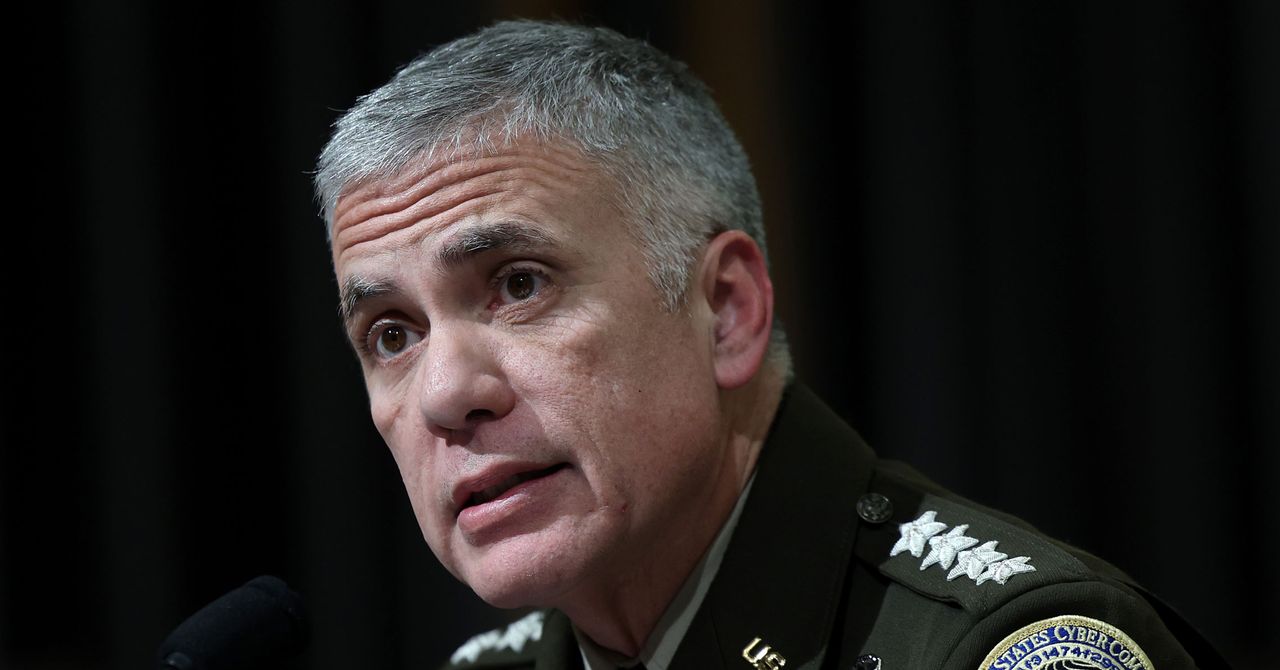
In alignment with other parts of the federal government, the Trump administration has been reshuffling intelligence and cybersecurity agencies to remove those considered disloyal to its vision. Additionally, the White House has shown hostility towards former U.S. cybersecurity officials. For instance, in April, Trump specifically instructed all departments and agencies to revoke the security clearance of former CISA director Chris Krebs. Recently, after criticism from far-right activist Laura Loomer, the Army secretary rescinded an academic position that former CISA director Jen Easterly was scheduled to hold at West Point. Amidst these shifts, former NSA and Cyber Command chief Paul Nakasone spoke with Defcon founder Jeff Moss, discussing AI, cybercrime, and the importance of partnerships in digital defense.
“I think we’ve entered a space now in the world where technology has become political and basically every one of us is conflicted,” Moss remarked. Nakasone, who sits on OpenAI’s board, agreed, referencing Trump’s January launch of the “Stargate” AI infrastructure initiative alongside Oracle’s Larry Ellison, SoftBank’s Masayoshi Son, and OpenAI’s Sam Altman. “And then two days later, just by chance, [the Chinese generative AI platform] DeepSeek came out,” noted Nakasone wryly. “Amazing.”
Nakasone also commented on demographic differences between the federal government and the tech industry. “When I was the director of NSA and commander of U.S. Cyber Command, I visited tech hubs, and I was twice the age of those I met with. Returning to D.C., I was among the younger ones. That’s a problem for our nation.”
Throughout the discussion, Nakasone focused on countering traditional U.S. adversaries like China, Iran, North Korea, and Russia, as well as specific digital threats. “Why aren’t we thinking differently about ransomware, which I think right now is among the great scourges we face,” he stated. “We are not making progress against ransomware.”
Moss occasionally pushed the conversation toward global geopolitical changes and conflicts fueling uncertainty. “How do you be neutral in this environment? Or is the world’s situation—Ukraine, Israel, Russia, Iran, America—making neutrality impossible?” Moss queried, adding later, “I’m trying to figure out how to get control amid the chaos.”
Referring to these remarks and Moss’ thoughts on using open source software as a community alternative to multinational tech companies, Nakasone hinted at the impending flux in global dynamics. “This will be an interesting storyline through ’25 and ’26. By next Defcon, will we still feel truly neutral? I anticipate not. It’s going to be very challenging.”