
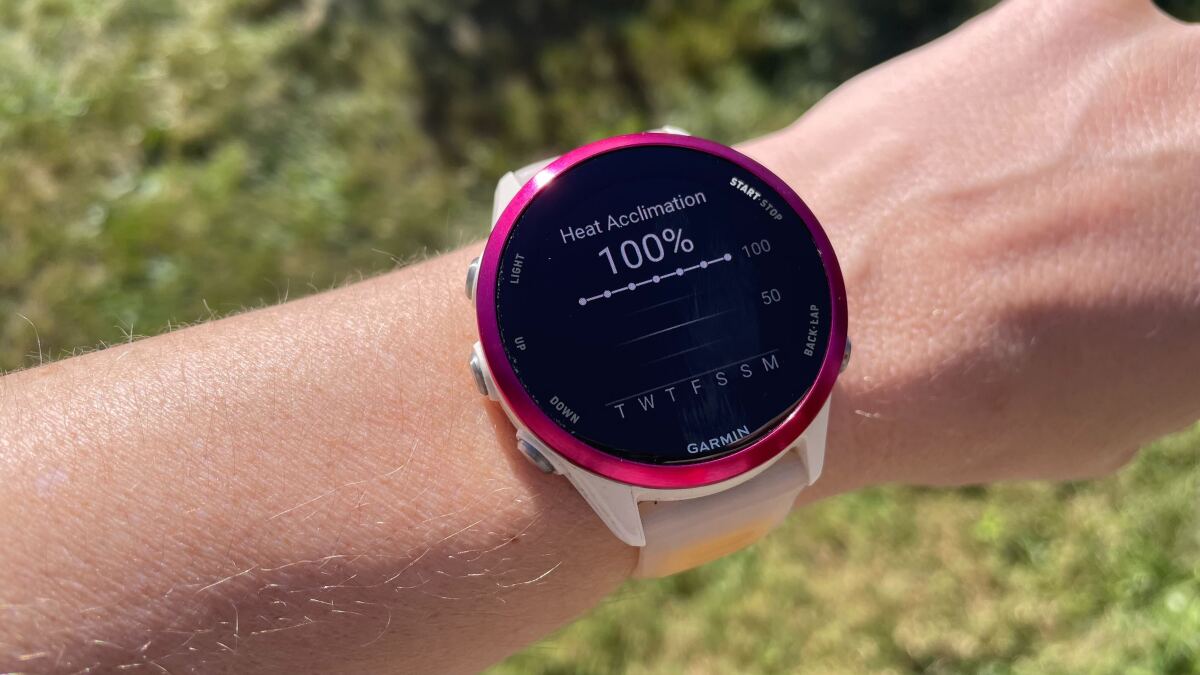
Running in the heat is challenging, but this year I was determined to handle it better. In the spring, I started using a Core 2 sensor to monitor heat exposure, later adding a Garmin Forerunner 570 watch for a heat acclimation score. During a grueling trail run on a hot August day, it hit me that running in such heat was something I never did before. Heat training hasn’t made it pleasant, but it made it possible. Last year, my runs were limited to five miles indoors. Now, I run ten miles outside, even during the day’s hottest hours. Seeing my progress through the gadgets has been intriguing, although their usefulness has waned as I’ve acclimated. While I’ll still do some heat training next year, it may look different. Here’s what I learned:
I began in spring with the Core 2, a device attached to a heart rate chest strap. Early cool runs offered no acclimation points, but warmer ones did, as did longer indoor sessions and sauna trips. Heat training, though, takes a toll on the body, even with easy workouts or merely sitting in a sauna. A 40-minute run plus sauna time boosted my score but left me tired. It was a tradeoff, prioritizing heat prep over overall fitness gains.
Interestingly, I now sweat more, which means my body’s improving at cooling. Sweat cools as muscles generate heat during workouts, allowing greater challenges. Adaptation means sweating sooner and more. In a sauna, I noticed I sweated more than others, confirming my training was working.
Mentally, seeking out heat training changed my perspective. Instead of avoiding the heat, I pursued it for better scores. Tracking metrics via gadgets was motivating. Graphs showing acclimation progress prompted more warm-weather runs. Struggles felt productive: I was acclimating. This mindset shift proved valuable.
I also prioritized heat safety. The Core 2, while not essential, prompted reconsideration of hydration. Brian Maiorano, a coach liaison at Core, informed me about pre-hydration. Sweating a lot means losing more water than can be consumed during long, hot workouts. Safety became a focus. I realized the importance of staying in safer heat zones and now schedule cooling breaks. Even halving ten-mile runs into two parts with a break improved safety.
The Garmin Forerunner 570 (using weather data) and the Core 2 monitor tracked acclimation differently. The watch provided a basic, yet aligned score. The Core 2 offered detailed data, requiring a charged battery and consistent wearing. Missing data due to oversight was a drawback. The Garmin proved more reliable over summer, always indicating 100% acclimation. As summer continued, neither gadget felt as crucial when already acclimated.
My experiment with heat training is ongoing. Adapting in spring succeeded, aided by gadgets. Currently, I embrace running in heat, favoring my Garmin for its ease. This fall, I’ll monitor how cool weather impacts performance, possibly entering an October race. Next year, I plan to use mental gains in training, seeking heat for early adaptation while staying hydrated and safe. Heat training empowered me to progress from treadmill runs to planning long trail runs.