
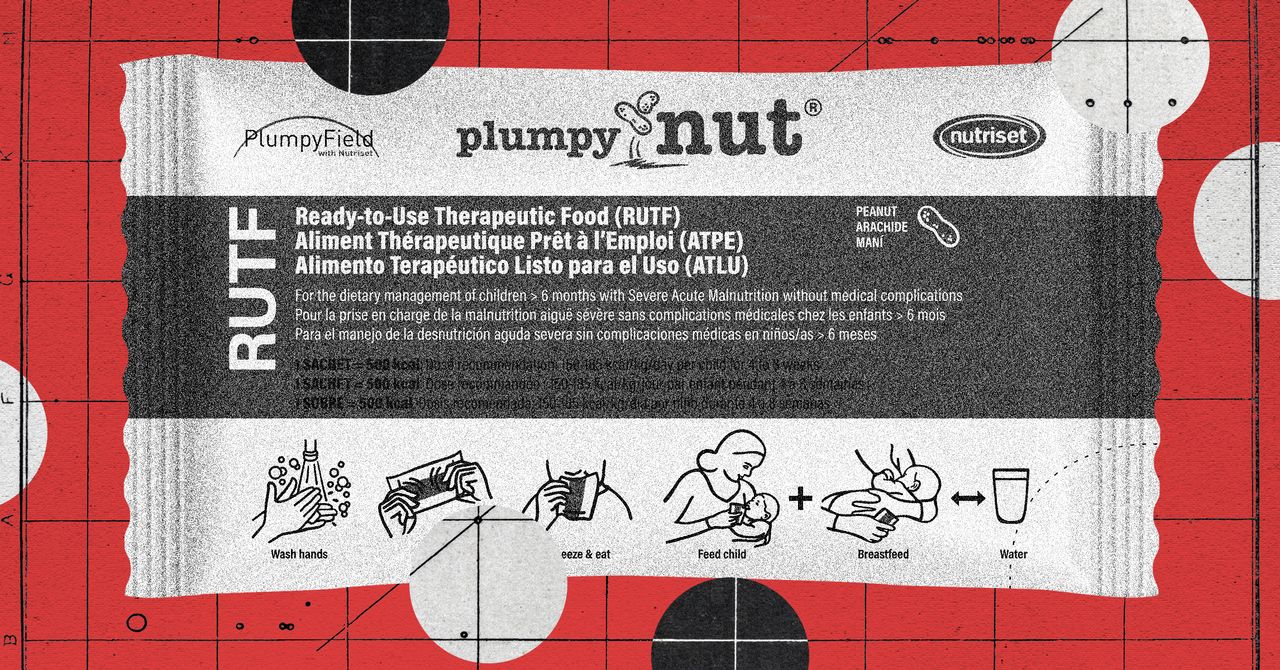
A paste derived from peanuts, containing 500 calories and nearly 13 grams of protein, is packaged in a 92-gram foil pouch designed for easy consumption by malnourished infants in critical situations. It does not require water or refrigeration, making it suitable for use in drought-affected regions and allowing it to be stored at room temperature for up to two years. A few sachets a day can lead to a 10% weight increase over six weeks, aiding recovery from severe acute malnutrition for less than $60 per child. Saving a life literally costs just 71 cents per serving.
This life-saving formula is called Plumpy’Nut. Created in 1996 by Nutriset, a company based in Normandy, and French pediatrician André Briend, it was the first-ever ready-to-use therapeutic food (RUTF): energy-rich pastes that have increased survival rates from severe acute malnutrition in children from below 25% to around 90%.
The paste has saved millions of lives. “It’s an incredibly effective emergency food,” says medical doctor Steve Collins, founder of advocacy group Valid Nutrition. “RUTF contains all essential nutrients needed for recovery from severe acute malnutrition. They’re easy to transport, energy-dense, and don’t need a cold supply chain or clean water.”
While Nutriset pioneered RUTF development, it’s not the sole player in this field. Mana, an American-made RUTF, is produced in Fitzgerald, Georgia. The company can produce 500,000 pounds daily—sufficient to fill four shipping containers and feed 10 million children annually.
Before Plumpy’Nut, severe acute malnutrition—mainly affecting children under five with very low weight-for-height scores—required constant attention at therapeutic feeding centers. Nurses in these often remote medical facilities fed infants with F100, a high-energy milk powder from Nutriset. Contamination was a frequent risk. “There was always a risk that water was contaminated and carried disease,” says Collins. This contributed to in-patient mortality rates being around 20%.
Plumpy’Nut is mainly made of peanut paste and vegetable oils. The nut-based formulation includes fat-soluble nutrients, as well as protein, energy, and fatty acids that aid recovery. It also includes skimmed milk powder providing dairy protein and essential amino acids. Added sugar masks the taste of micronutrients like potassium, magnesium, calcium, iron, zinc, iodine, copper, selenium, and vitamins A, D, E, B, C, and K.
An anecdote suggests Briend’s inspiration for Plumpy’Nut came from Nutella, but it actually arose from his experiences in the Sahel where water-based solutions proved ineffective. Collaborating with Nutriset founder Michel Lescanne, he combined F100 with a peanut spread, oil, and sugar.