
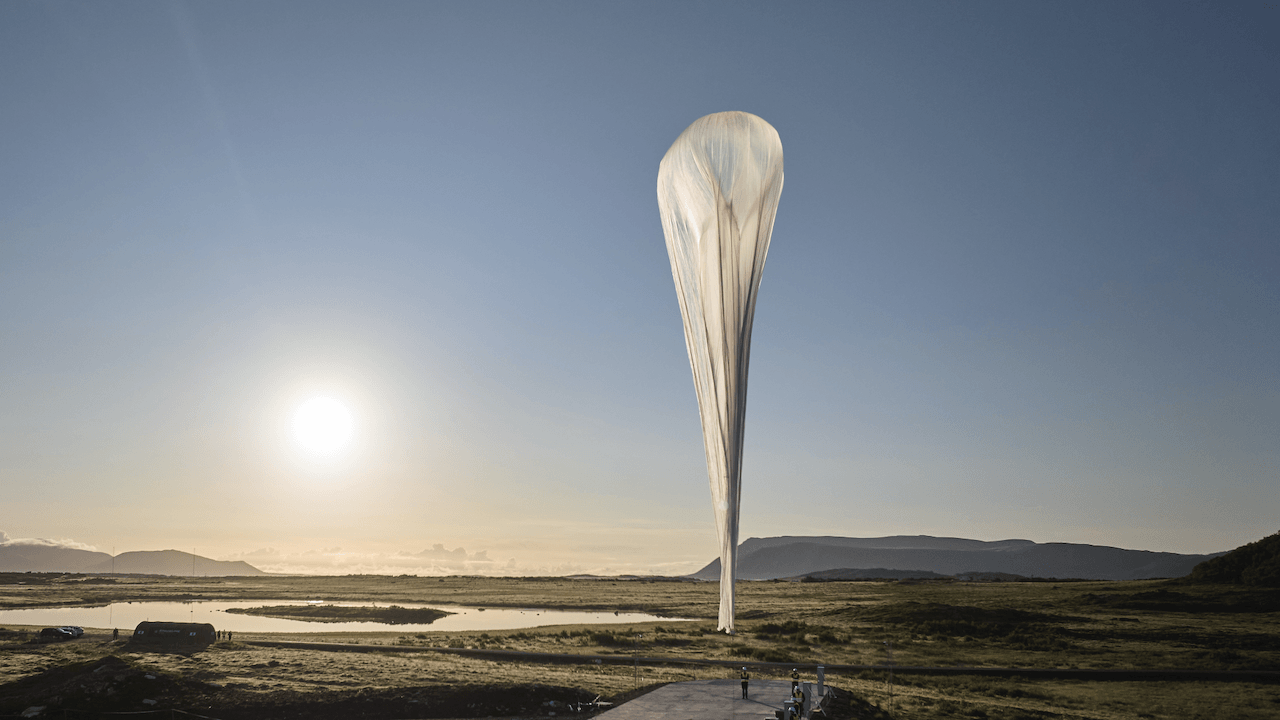
Danish aerospace startup Spaceline Labs has launched its stratospheric Earth observation platform, Panthera, from Andøya, Norway. Operating at altitudes of 18 to 50 km, Panthera delivers real-time, high-resolution imagery with 10 cm/px quality, surpassing traditional satellite systems.
“This launch marks significant progress in our strategic and technical plans,” stated Nicolai Iversen, co-founder and CEO. “We’re moving from demonstration to large-scale European coverage.”
Developing a reliable system for near-space was challenging. “A key challenge was designing an advanced imaging and communications system for persistent 10 cm/px imagery without foreign infrastructure,” Iversen noted.
Spaceline created a dedicated downlink for European data control, with tech tested in extreme conditions like those at the ESA Mars Simulation Laboratory. Coordination with Norwegian authorities was crucial due to the platform’s altitude and reach.
Panthera is already delivering data, merging with satellite imagery and AI analytics for maritime surveillance, environmental monitoring, and disaster response.
“Panthera’s launch, just meters from Isar Aerospace’s Spectrum launch, shows the rapid progress in Europe’s near-space sector,” said Pedersen.
Spaceline is expanding, with a new 1,000 sq. m facility planned at Hans Christian Andersen Airport, Denmark, set for early 2026 completion.
Founded by Nicolai Iversen, Simon Vilms Pedersen, and Mads Toudal Frandsen, Spaceline is partnered with Airbus Space & Defence, Andøya Space, and is involved in ESA’s Civil Security from Space program.
Panthera, Spaceline’s third-generation platform, establishes it as a key provider of stratospheric intelligence infrastructure in Europe.