
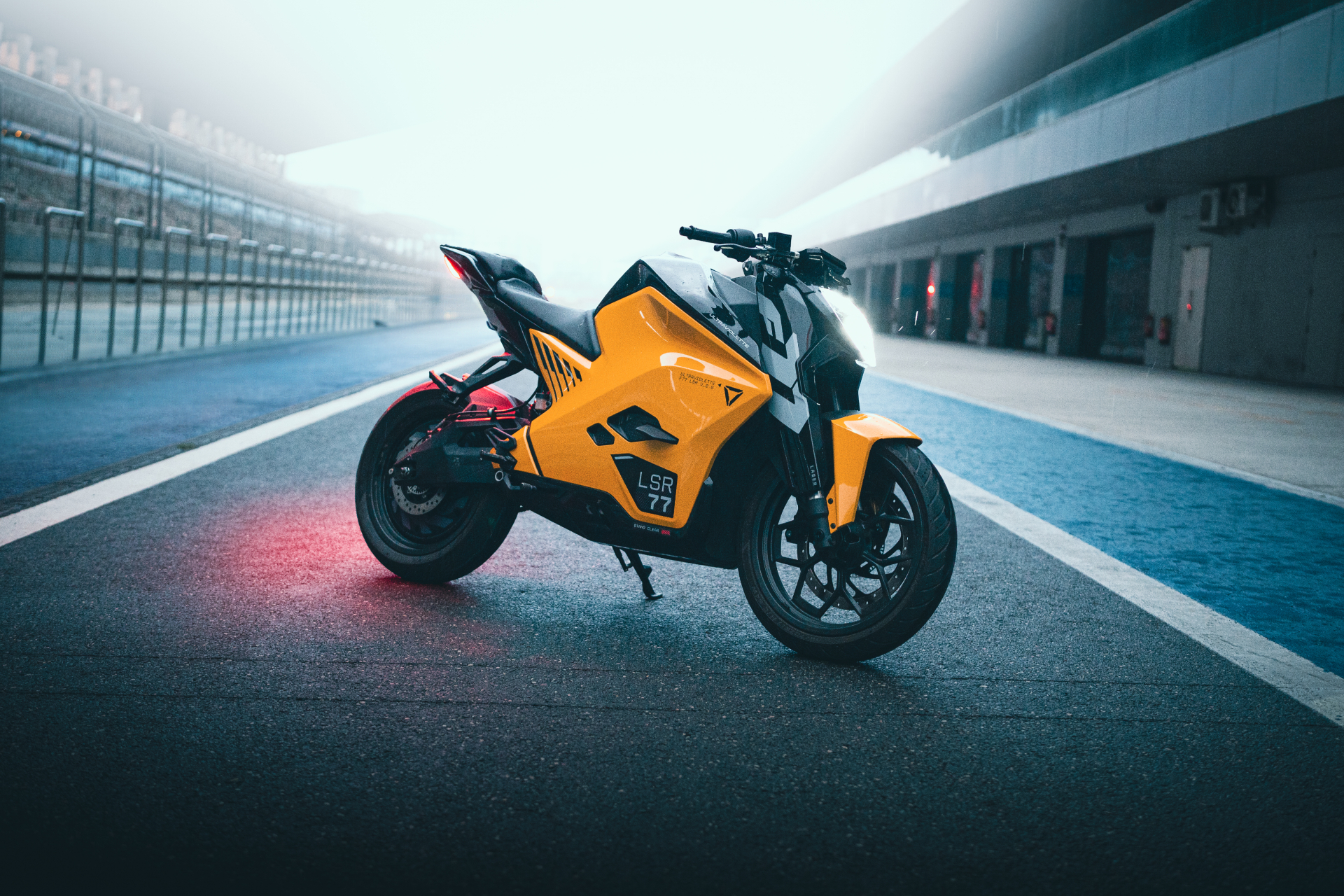
Two months ago, Indian electric motorcycle startup Ultraviolette expanded into 10 European countries. Now, with $21 million raised in an equity round led by TDK Corporation’s corporate venture arm, Ultraviolette is accelerating its expansion plans.
The nine-year-old startup aims to quadruple its European presence, enter markets like Latin America and Southeast Asia, and grow its portfolio to 14 models by early 2027. Following the 2024 launch of the F77 Mach 2 and the F77 SuperStreet in February, Ultraviolette is on a path to global expansion.
Ultraviolette was founded by childhood friends Narayan Subramaniam (CEO) and Niraj Rajmohan (CTO), who used their backgrounds in mechanical engineering, automotive design, computer science, and electronics to innovate the mid-segment two-wheeler market.
Inspired by Tesla, they founded Ultraviolette when India’s electric two-wheeler market was filled with low-speed models mainly for commercial use. Initial growth was driven by affordable Chinese imports, followed by domestic startups and legacy manufacturers entering the field.
Instead of joining the existing market race, Ultraviolette’s aim was to create electric motorcycles rivaling the performance of 150cc to 800cc internal combustion engine sports bikes.
“We asked ourselves, if we have to make electric exciting in two-wheelers, what would it take? And that’s the objective with which we started,” said Rajmohan in an exclusive interview.
The Bengaluru-based startup took four years from its inception in 2016 to unveil its first model in 2019, going through several design iterations before finalizing the seventh version, the F77. The commercial model debuted offering over 186 miles of range, a top speed of 96 mph, a 30kW peak power, and up to 100 newton-meters of torque.
Ultraviolette has also launched the Shock Wave motorcycle and the Tesseract scooter, which includes front and rear radars and cameras for an assisted-driving experience and blindspot detection. The scooter is priced at ₹145,000 ($1,650), while its motorcycles start from ₹175,000 ($2,000) and go up to $10,000.
Ultraviolette’s vehicles feature eSIM connectivity with predictive maintenance through a proprietary diagnostics system, providing insights on issues like chain lubrication. An accompanying app offers this data to users on the go.
The company has set up a manufacturing and assembly facility in Bengaluru’s Electronics City, with a production capacity of 30,000 units. Handling everything in-house, from embedded software and battery management to motor controllers and battery manufacturing, Ultraviolette employs around 500 people, including 200 in corporate roles and R&D.
Ultraviolette’s business model was influenced by Tesla owners, with the co-founders learning from early Model S adopters in the U.S. about what set the car apart.
“These Tesla cars were very special, as owning them was seen as progressive. It was more of a lifestyle statement,” Rajmohan explained to TechCrunch.
They incorporated that sentiment into Ultraviolette’s design and branding, aiming for a global presence from the start. “Ultra” denotes cutting-edge, and “violet” is easily pronounced in over 30 European languages. Aligning with this vision, the company pursued European certification for its vehicles ahead of market entry.
Unlike other Indian electric two-wheeler manufacturers catering to local demands, with India accounting for almost 40% of global motorcycle sales (mostly internal combustion engines), Ultraviolette’s focus extends beyond its domestic market. As India’s EV adoption rate is 7.66%, compared to the global average of 16.48%, a report from NITI Aayog suggests India’s 2030 target of 30% EV penetration may be ambitious.
India’s price-sensitive market relies on two-wheelers as essential, affordable transportation, posing a challenge for high-end variant sales in the country for Ultraviolette.
“We were very clear that what we’re doing is, we’re working toward segments which are more universal in nature,” said Rajmohan.
What’s Next?
Ultraviolette plans to expand its Bengaluru production capacity to 60,000 units and open a larger facility to scale to 300,000 units by early next year. With 20 stores across 20 Indian cities, the company aims to reach 100 stores by March, expecting to open 50 by the festive season later this year.
Rajmohan revealed plans for further European expansion, with 40 dealers currently in place. “Next year is where the scale-up happens in Europe,” he stated.
The startup plans to initiate pilots in Latin America and Southeast Asia next year and enter markets such as the U.S. and Japan later.
Having sold over 3,000 motorcycles in India, Ultraviolette aims to sell up to 10,000 this year, targeting over $50