
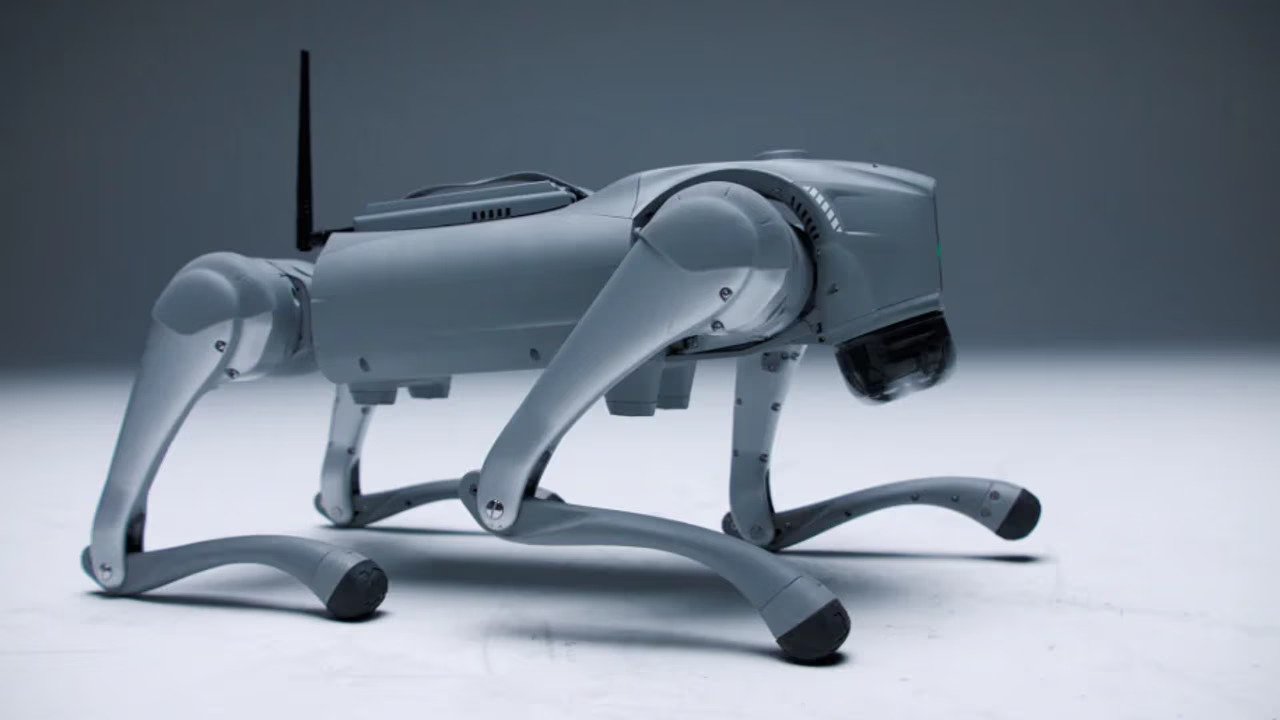
This year, Swedish startup IntuiCell unveiled a video showcasing “Luna,” a four-legged robot dog. Luna learns to stand autonomously and adapts through sensory feedback and real-world interactions, similar to a newborn animal, with no pre-set intelligence or instructions.
This represents a shift from “pattern recognition at scale” in robotics to autonomous learning agents capable of adapting and operating with true intelligence.
CEO Viktor Luthman elaborates that IntuiCell’s goal is to create AI that understands and learns in a way modeled on brain function, not just mimicking it. Unlike standard AI systems relying on large datasets and backpropagation, IntuiCell developed a physical AI agent that learns continuously, similar to biological nervous systems. This allows the system to function effectively in dynamic environments where traditional AI often struggles.
Luthman emphasizes, “They separate training and inference—we don’t. With us, learning never stops. It happens in real time. We’re building the brain for all non-biological intelligence.”
In essence, machines learn directly from their surroundings without needing pre-training or large datasets.
Luthman has a background in startups focused on cutting-edge science and was drawn to IntuiCell’s vision through a tech portfolio head at Lund University.
Luthman joined IntuiCell as CEO in January 2021, inspired by their bold vision and innovative approach to AI. He acknowledges that IntuiCell’s method, which draws from over 30 years of research at Lund University, challenges conventional neuroscience and AI paradigms.
IntuiCell’s unique approach revolves around understanding how neurons independently prioritize problems and solve challenges, scaling this from simple organisms to complex tasks like a child’s learning process.
While IntuiCell isn’t selling a product, its infrastructure aims to be the “brain for all non-biological intelligence.” This applies to both physical and digital agents, needing to learn and adapt in real time.
IntuiCell conducted a study with ABB’s SynerLeap program revealing its system’s capability in anomaly detection without extensive fine-tuning or pre-training.
Luthman aspires to develop machines that generalize skills and refine behavior through interaction, similar to how service dogs learn through experience.
Efficiently running on a few thousand neurons with off-the-shelf GPUs, IntuiCell’s technology proves it can solve real problems without extensive resources.
Luthman challenges the AI status quo by focusing on small-scale intelligence and efficient learning models, rather than larger datasets and models. IntuiCell’s strategy is to start with high-value projects post-technology scaling, with plans for broader applications.