
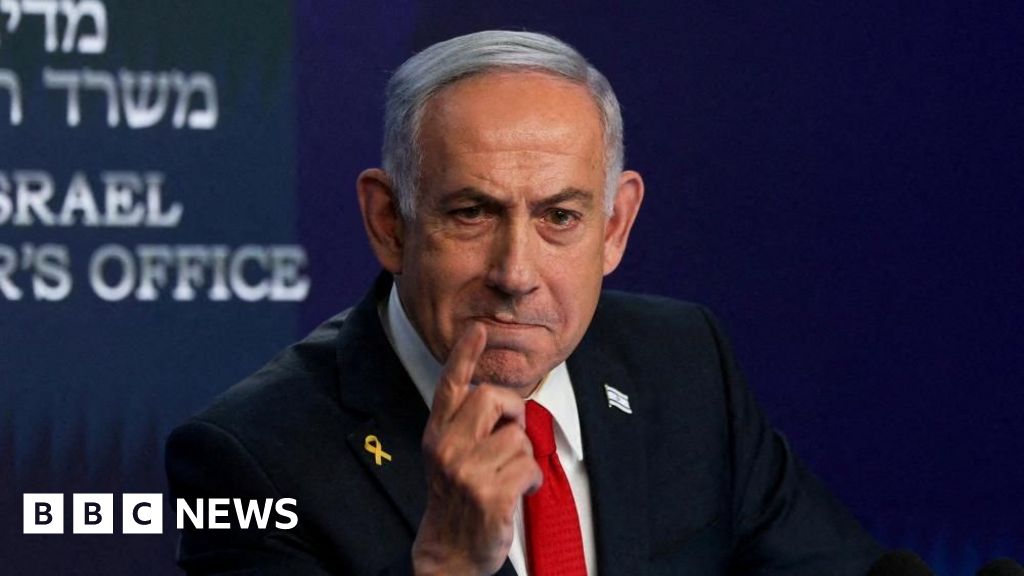
Israeli Prime Minister Benjamin Netanyahu’s plans for a renewed military campaign in the Gaza Strip have raised concerns among military leaders, opposition from families of hostages, and fears of increased Palestinian casualties. These plans also risk further isolating Israel internationally.
Before the security cabinet meeting, where a decision to capture Gaza City was supported by a majority, Netanyahu spoke to Fox News about Israel’s goal to seize full control of Gaza for security purposes, oust Hamas, and transfer governance to another party, without specifying details. However, he indicated Israel did not wish to permanently occupy the territory.
“We don’t want to govern it,” Netanyahu stated. “We want to hand it over to Arab forces.”
There were no specifics on potential arrangements or countries involved, but it was a hint at his vision for post-war Gaza.
Currently, Netanyahu is advocating for an intensified offensive, with the Israeli military reportedly controlling about 75% of the area, targeting Gaza City and surrounding regions, where both a million Palestinians reside and hostages are believed to be held.
Such operations may take months, potentially leading to massive displacements and worsening the humanitarian crisis. This could provoke international backlash from countries urging Israel to end the nearly two-year-long conflict that began following Hamas’s attacks on 7 October 2023.
Disagreements between political and military leaders have emerged, with Israeli army chief Lt Gen Eyal Zamir reportedly advising Netanyahu that completely occupying Gaza would be perceived as a “trap.”
Zamir warned that such an offensive would jeopardize the lives of 20 hostages believed to be alive and further strain exhausted soldiers.
Hostage families share these concerns, advocating for negotiating with Hamas to ensure hostage release.
According to Maariv newspaper, there’s concern that an expanded offensive could result in hostages being killed, whether by their captors or inadvertently by Israeli forces.
There are also divergences among Israel’s international allies on this issue. The British ambassador to Israel, Simon Walter, labeled a full occupation of Gaza as a “huge mistake,” countering US and Israeli claims that UK recognition of Palestinian statehood would reward Hamas.
Meanwhile, US envoy Mike Huckabee, a strong Israel supporter, said decisions on the Gaza Strip should be left to Israel, stating, “It’s not our job to tell them what they should or should not do.”
Netanyahu has yet to present a post-war plan for Gaza, excluding Palestinian Authority governance. Public polls suggest most Israelis prefer a deal with Hamas for hostages’ release and to end the war.
Israeli leaders argue that Hamas is currently resistant to negotiations, emboldened by international pressure on Israel.
The threat of full occupation might be a tactic to compel Hamas into concessions during stalled negotiations.
Critics believe Netanyahu is prolonging the conflict to maintain his coalition, which includes ultranationalist ministers threatening to leave if any agreement with Hamas is reached.
Ministers Itamar Ben Gvir and Bezalel Smotrich have defended expelling Palestinians from Gaza—potentially a war crime—and resettling the area with Jews.
The war in Gaza has resulted in over 61,000 Palestinian deaths, according to Gaza’s health ministry, controlled by Hamas. The 7 October Hamas attacks on Israel left around 1,200 dead, with 251 taken as hostages to Gaza.